Home › Concrete Patio Installation
A new concrete patio in Denver, CO creates a low maintenance outdoor living space for relaxing and entertaining. We design and install standard broom finished and stamped concrete patios tailored to your yard. Our team pays attention to slope, drainage, and control joints so your backyard concrete patio looks great and performs well for years.
Superior Concrete Denver provides professional concrete patio throughout Denver, CO, Colorado and the surrounding area. Our licensed, insured crew delivers safe, clean, on-time work with a free estimate before anything begins. Call (970) 648-8412 or request your free quote.
Concrete patios built for real Denver backyards
A good concrete patio should feel like an extension of your home, not an afterthought slapped onto the back door. At Superior Concrete Denver, we focus on designing patios that match how Denver homeowners actually live: grilling, watching the game outside, letting dogs run, and handling sudden afternoon storms and freeze-thaw cycles.
In many older Denver neighborhoods like Park Hill, Wash Park, or Berkeley, yards are tight and slopes are common. We start every concrete patio project with a site walk to understand your yard, your drainage, and how you move between the house, garage, and lawn. We measure existing doors and thresholds so you do not end up with a step that is too tall or a patio that directs water toward your foundation.
We talk through how you plan to use the space. Do you want a dining area for six, a spot for a gas fire pit, or room for a future hot tub? Those choices affect patio size, thickness, and reinforcement. For example, a standard seating patio might be 4 inches thick, while a hot tub pad section might be bumped to 6 inches with heavier rebar. Our goal is to get those decisions right before we ever bring in equipment.
Superior Concrete Denver also checks for local requirements, particularly in Denver where setbacks, easements, and older clay sewer lines can surprise you. If your patio layout gets close to a property line or utility corridor, we adjust the design or help you navigate any simple permits that might be needed so you are not forced to tear something out later.
How we install a concrete patio that survives Denver winters
Concrete patio installation in Denver is not just about pouring a slab. Our crew follows a clear, step-by-step process that is tailored to our climate and soil conditions.
1. Layout and excavation: We mark the patio shape with paint and string lines, then remove sod and soil to the required depth, usually 7 to 9 inches below the desired finished height. This allows room for compacted base and the concrete itself. In many Denver backyards we also cut and remove old, cracked patios or failing brick pavers before we start.
2. Base preparation: A stable base is what keeps your patio from settling and cracking. We install 3 to 4 inches of compacted Class 5 road base or similar crushed rock, then compact it with a plate compactor in multiple passes. On older Denver lots that have been regraded or filled, we sometimes need additional base or spot undercutting to eliminate soft pockets.
3. Forms, reinforcement, and slopes: We set wood or metal forms to create clean edges and accurate elevations. Every patio is given a gentle pitch, usually about 1/8 to 1/4 inch per foot, away from the house so water drains properly. For reinforcement, we typically use 3/8 inch rebar in a grid or welded wire mesh, depending on patio size and load. On sloped yards, we may incorporate a small concrete step or seat wall instead of a steep grade to keep the patio comfortable and safe.
4. Pouring and finishing: We order a mix that fits your needs, often a 4,000 psi air-entrained concrete that performs better in freeze-thaw conditions. The crew places and screeds the concrete, then bull floats it to level the surface and bring up fine paste for finishing. For most Denver patios we recommend a light broom finish, which stays safer in snow and ice. If you prefer a smoother or decorative finish, we balance that with slip resistance and how you plan to use the space.
5. Control joints and curing: We cut or tool control joints at planned intervals, usually every 8 to 10 feet, which helps manage and hide minor cracking as the concrete cures and seasons. Then we apply curing methods, which may include a curing compound or light wet cure, and we will tell you exactly when you can walk, grill, and park furniture on your new patio so you do not accidentally damage the surface.
Design and finish options for your Denver concrete patio
Concrete gives you far more design flexibility than most people expect. Superior Concrete Denver can keep things clean and simple, which works well with many Denver bungalows and mid-century homes, or we can incorporate decorative elements that complement your siding, brick, or landscaping.
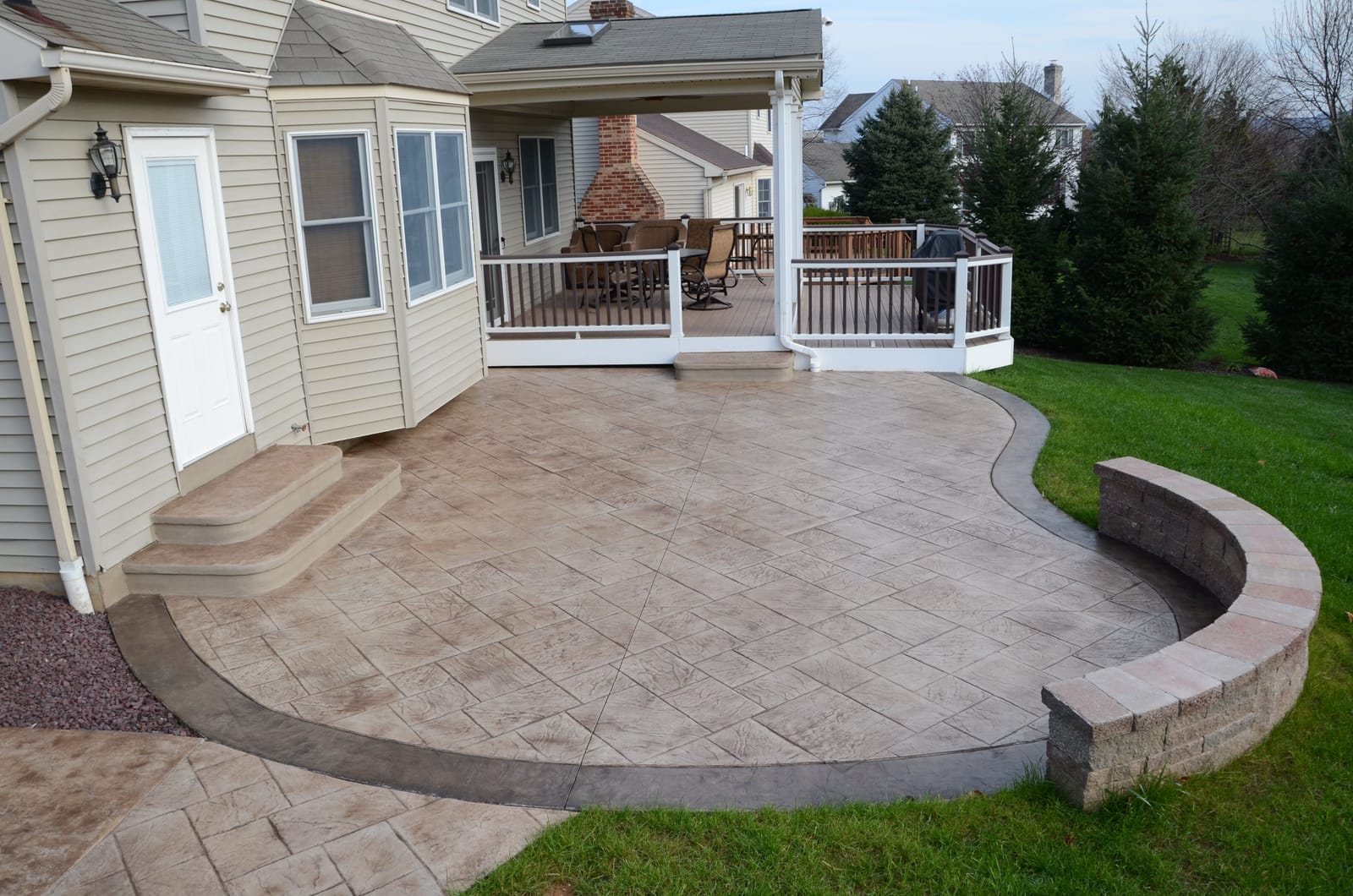
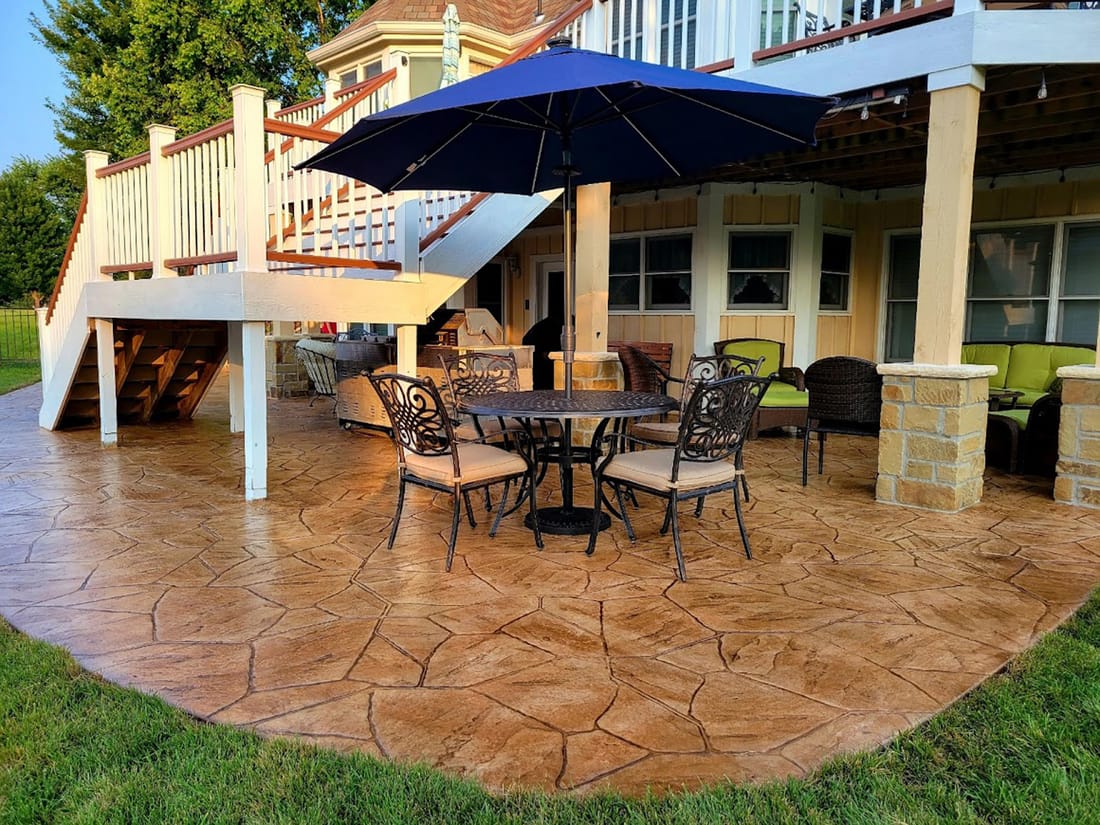
Finish choices usually start with broom, which is the most practical for snow and ice. For a more custom look, we can do troweled borders combined with a broomed field or sawcut patterns that create the feel of large tiles. If you want a warmer appearance without the maintenance of real stone, we can use stamped concrete patterns to mimic flagstone, slate, or pavers. On many Denver patios, homeowners choose a simple, large ashlar slate stamp with subtle color variation.
Color options include integral color mixed directly into the concrete, or release and stain treatments applied at the surface. Integral color hides light chips and wear better, which is helpful in high-use patios with kids, pets, and grills. If your house has red or tan brick, we can select tones that avoid clashing while still looking modern.
We also think about practical details like where grill grease will drip, where your snow shovel will scrape most often, and how furniture will sit. For example, darker colors hide stains better but can heat up in direct sun, which matters on south-facing Denver yards. For homes with big shade trees or irrigation overspray, we may recommend a sealer that helps resist leaf staining and water marks, along with a cleanup routine you can actually stick to.
Lighting conduit, post brackets for pergolas, and sleeves for gas lines or speaker wiring can be set before the pour so you do not have to core drill the new patio later. We walk through these options upfront so the patio you get now can support the upgrades you might want in a year or two.
What affects the cost of a concrete patio in Denver
Concrete patio pricing in Denver is driven by a handful of real factors, not just square footage. When Superior Concrete Denver puts together a quote, we explain where your dollars are going so you can decide what is worth it for your yard and lifestyle.
Patio size and access are two major drivers. A small patio that requires wheelbarrowing concrete through a narrow side yard takes more labor than a slightly larger patio we can reach with a chute or line pump. If we have to remove and haul away an old slab, failing deck, or large tree roots, that demolition and disposal is part of the cost too.
Thickness and reinforcement matter as well. A basic 4 inch patio with standard reinforcement is ideal for everyday use. If you want to support a hot tub, heavy outdoor kitchen, or large masonry fire feature, we will price thicker sections with more steel and sometimes a higher strength mix. Denver’s clay soils and expansive conditions in some neighborhoods may call for more robust base preparation, which we will point out during your site visit.
Design complexity can raise or lower the overall price. Simple rectangle patios with a broom finish are the most budget friendly. Curved edges, multiple levels, colored or stamped finishes, and seat walls all add time, materials, and skill. Our approach is to show you a good-better-best range, then help you blend one or two features that give you the most visual impact without overspending.
Finally, timing and season can influence cost. Pouring concrete in late fall or early spring is possible in Denver, but if temperatures drop too low we must use blankets, accelerators, or adjusted schedules to protect the slab. Those measures can affect pricing, and we will let you know when it might be smarter to shift the project window instead of paying for heavy cold weather precautions.
Common concrete patio issues in Denver and how we prevent them
Denver’s climate is hard on exterior concrete. Big temperature swings, freeze-thaw cycles, and drying winds cause many of the problems you see in older patios across the city. Superior Concrete Denver focuses on preventing those issues from the start and being transparent about what is normal and what is not.
Hairline cracking is virtually unavoidable in any concrete, but where and how it shows up can be controlled. Our careful base prep, reinforcement layout, and control joint spacing are geared to keep cracks small and aligned with those planned joints. If a crack appears outside a joint, we explain your options, which might be a structural evaluation if it is unusually wide or simple cosmetic patching if it is minor.
Spalling and surface flaking are common when patios are overworked with water at the surface, finished in freezing weather without protection, or repeatedly hit with deicing salts. We use air-entrained mixes and avoid adding extra water on site so the finished surface is more durable. We also give you clear winter care instructions, including which deicers to avoid and when to simply apply sand for traction instead.
Drainage problems can shorten the life of a patio and cause foundation issues. Before installation, we check downspout locations, existing grade, and low spots in your yard. If needed, we incorporate channel drains, gravel bands, or small regrades so water has somewhere logical to go. On tight Denver lots where space is limited, we explain realistic solutions that fit within your boundaries and budget.
Finally, we talk about long term care. A well installed patio does not require constant maintenance, but it does benefit from periodic cleaning and resealing, especially decorative or colored surfaces. We recommend a reseal schedule based on your exposure and use, and we can provide that service or coach you through products that work well in our local conditions.