Home › Commercial Sidewalks and Curb
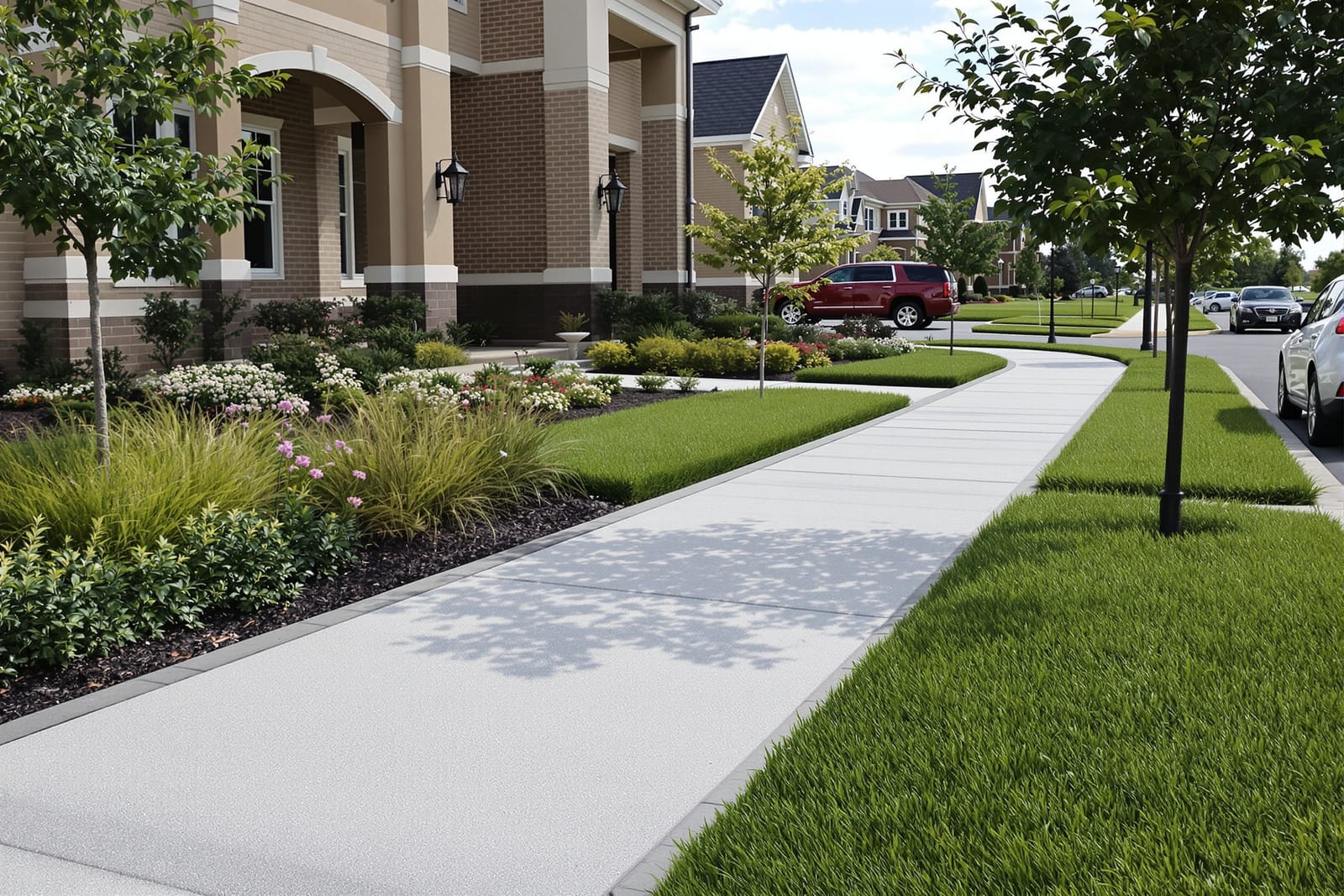
Commercial concrete sidewalks in Denver, CO guide pedestrians safely around your site and meet accessibility standards. We install city sidewalks, curb and gutter, and ADA compliant ramps for new developments and renovations. Our crew follows local specs on thickness, slopes, and finishes so your commercial concrete sidewalk work passes inspection the first time.
Superior Concrete Denver provides professional commercial concrete sidewalk throughout Denver, CO, Colorado and the surrounding area. Our licensed, insured crew delivers safe, clean, on-time work with a free estimate before anything begins. Call (970) 648-8412 or request your free quote.
Commercial Concrete Sidewalks and Curbs for Denver Properties
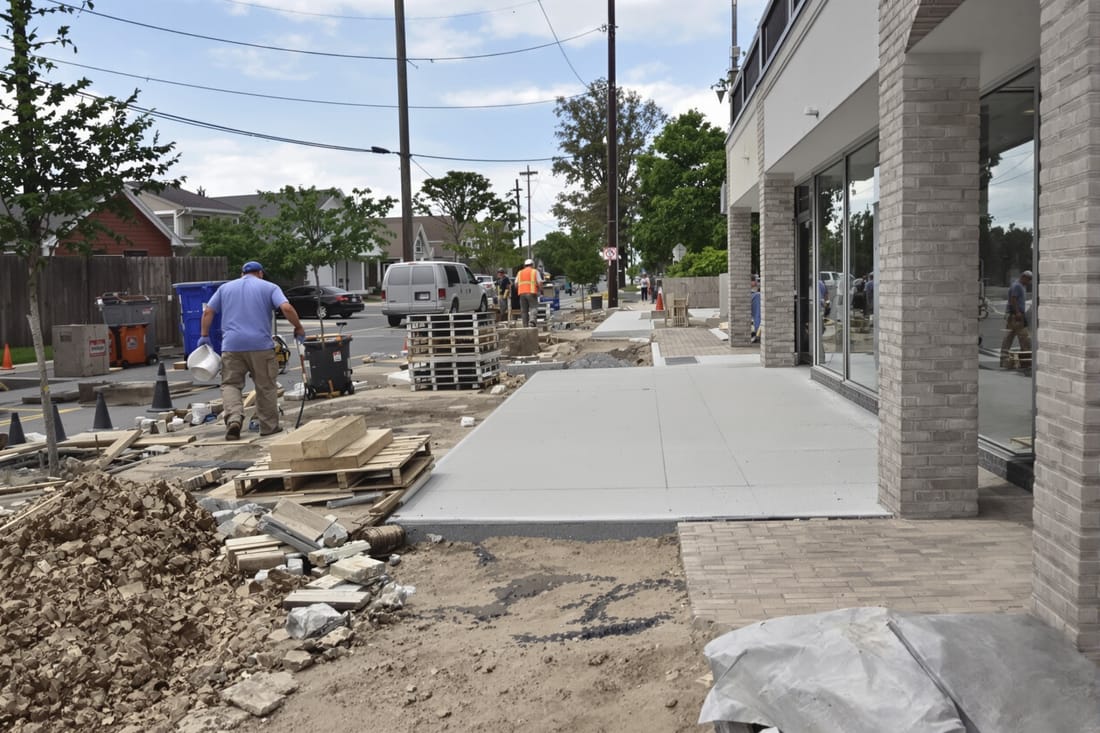
Superior Concrete Denver designs and builds commercial concrete sidewalks and curb systems that hold up to Denver traffic, freeze–thaw cycles, and snow removal equipment. Our crews focus on function first, then appearance, so your walkways are safe, ADA compliant, and easy to maintain.
A commercial concrete sidewalk is more than a strip of gray concrete. It has to handle heavy foot traffic, carts, delivery dollies, plows, and de‑icing chemicals. Curbs must control drainage, protect landscaping and asphalt, and give clear separation between vehicles and pedestrians. We look at how your customers and service vehicles actually use your property before we design anything.
Whether you manage a retail center, office park, multifamily complex, school, or industrial site, we adapt the thickness, reinforcement, and layout to your specific use. Our goal is to deliver a sidewalk and curb system that still looks clean and performs correctly ten or fifteen Denver winters from now.
How We Plan and Design Your Commercial Sidewalk Project
Every commercial concrete sidewalk job starts with a site walk. A project manager from Superior Concrete Denver reviews your existing conditions, grades, drainage patterns, and key access points. We note door thresholds, ADA routes, trip hazards, and how snow tends to pile and melt on your site.
From there we create a layout that accounts for:
• Pedestrian flow, such as main entries, bus stops, and crosswalks.
• Required sidewalk width for your occupancy type and expected traffic.
• Slope limits for ADA and local Denver code.
• Drainage away from buildings and toward approved curb inlets or swales.
• Transitions to existing asphalt, concrete pads, or interior slabs.
We then select slab thickness, usually 4 to 6 inches for typical commercial sidewalks and thicker where service dollies, trash carts, or light vehicles cross. We specify reinforcement only where it adds real value, such as welded wire mesh or rebar at drive approaches and dumpster enclosures. Expansion joints, tooled control joints, and thickened edges are placed on a plan so cracking is controlled instead of random.
You get a clear written scope, including square footage, thickness, reinforcement type, and any decorative upgrades like color or broom pattern. This planning step keeps change orders to a minimum and helps you compare our proposal to others on a true apples‑to‑apples basis.
Site Preparation, Demolition, and Subgrade Work
On commercial properties in Denver, the hidden work under the sidewalk and curb often determines how long they last. Superior Concrete Denver spends real time on subgrade preparation because it is where many low‑bid projects fail.
If we are replacing existing walks or curbs, we use saws to create clean edges, then remove old concrete with compact equipment so surrounding surfaces and utilities stay protected. We haul debris to approved recycling or disposal facilities, something many property managers now require for compliance documentation.
For new installations, we strip organic material and soft soils, then compact the subgrade with plate compactors or rollers until it meets density targets. In areas with poor native soils or where vehicles cross, we often add a 4 to 6 inch layer of compacted road base to support the slab.
We set forms to the designed elevations so water drains where it should. At this stage we also coordinate with your electrician, plumber, or irrigation contractor to sleeve for future conduit or lines under the walk, which avoids expensive cutting later. Before any concrete is poured, we confirm slopes, thickness, and joint locations with you or your representative on site.
Concrete, Finishes, and Curb Types That Work in Denver
For commercial concrete sidewalks in Denver, we typically use a 4,000 to 4,500 psi air‑entrained mix designed for freeze–thaw durability and de‑icing salts. Air entrainment helps the slab survive cycles of freezing meltwater that are common in our climate. For curbs and gutters along busy drives, we may specify a higher strength mix for impact resistance.
Standard sidewalks receive a broom finish, which provides traction in wet or snowy conditions and is favored by most safety officers and risk managers. We can align the broom pattern with building architecture or use different textures at crosswalks to visually cue pedestrians and drivers.
For branding or higher visibility properties, we offer integrally colored concrete, decorative saw cuts, and exposed aggregate borders. Unlike purely decorative contractors, we balance aesthetics with durability so the top surface can still handle shovels, plows, and de‑icers.
Curbs are tailored to use. Typical options include vertical curb and gutter along city streets, mountable or roll curbs for drive entries, and thickened curb sections where truck tires ride close to the edge. At loading areas we often pour integral curb and thickened sidewalk in a single operation so impact does not separate the two components.
How Denver’s Climate and Seasons Affect Scheduling and Performance
Denver’s altitude and variable weather directly affect when and how commercial concrete sidewalks and curbs should be installed. Superior Concrete Denver schedules most large pours from late spring through early fall, when daytime temperatures support proper curing and night temperatures stay above freezing.
We do pour in cooler months when needed, but we adjust methods. This can include warm water in the mix, non‑chloride accelerators when appropriate, and insulated blankets to protect fresh slabs from freeze damage. In midsummer, rapid evaporation can weaken the surface if not managed, so we may place concrete earlier in the day, use evaporation reducers, and implement stricter curing practices.
Owners should also consider how snow operations interact with new concrete. We typically recommend avoiding aggressive plowing with steel blades on fresh sidewalks for at least the first season when possible. We will advise you which de‑icing products are safest for your specific mix design and curing time, since some chemicals are far harsher on concrete than others.
Planning around these local realities results in sidewalks and curbs that last longer and require fewer repairs, which protects your operating budget over time.
Cost Drivers, Budget Options, and Long‑Term Value
Commercial concrete sidewalk pricing in Denver is driven by more than square footage. When you request a quote from Superior Concrete Denver, we walk you through the main cost factors so you can adjust scope intelligently rather than simply chasing the lowest number.
Key drivers include:
• Thickness and reinforcement. Thicker slabs and rebar or heavier mesh increase cost but may be necessary at service doors and drive approaches.
• Access and demolition. Tight sites, limited staging, or heavy demo increase labor and equipment time.
• Site conditions. Poor soils, steep grades, or tricky drainage corrections require more base prep and formwork.
• Finishes and details. Colored concrete, decorative borders, or custom curb types add to the budget.
To help meet budget, we can often standardize finishes, prioritize high‑traffic or high‑liability areas first, or phase the work over multiple fiscal periods. We can also value‑engineer by changing reinforcement strategy or curb details where loads are lighter. The goal is not the cheapest possible sidewalk today, but the lowest life cycle cost, which usually comes from getting the subgrade, drainage, and mix right the first time.
Common Problems We Solve and What to Ask Before You Hire
Many of our commercial concrete sidewalk projects in Denver involve fixing issues created by earlier work. Typical problems include heaving or settlement from poor base prep, standing water along buildings because slopes were set incorrectly, cracked or spalled surfaces from inadequate curing, and curb sections broken by trash trucks due to underdesigned thickness.
Superior Concrete Denver addresses these by diagnosing the root cause, not just patching the visible damage. We may recommend partial removals with added base, new joint layouts, thicker sections at load points, or drainage adjustments such as added curb inlets or regraded swales.
If you are comparing contractors, ask for details on three topics: concrete mix design for our climate, how they will compact and proof‑roll the subgrade, and how they plan to control and cure the concrete during the first week. Ask to see a joint layout, not only a sketch of the footprint. Also confirm who is responsible for traffic control, permits, and city inspections when work interfaces with public right of way.
Our team handles coordination with Denver permitting where required, sets up clear pedestrian detours, and communicates schedules so your tenants, staff, and customers know what to expect. The result is a commercial concrete sidewalk and curb project that performs as it should, completed with minimal disruption to your operations.