Home › Concrete Driveway Installation
A professionally installed concrete driveway in Denver, CO boosts curb appeal and stands up to freeze thaw cycles. We handle everything from tear out to grading, forms, reinforcement, and finishing. Our driveway contractors focus on proper base prep and drainage so your new concrete driveway stays smooth and durable for years.
Superior Concrete Denver provides professional concrete driveway throughout Denver, CO, Colorado and the surrounding area. Our licensed, insured crew delivers safe, clean, on-time work with a free estimate before anything begins. Call (970) 648-8412 or request your free quote.
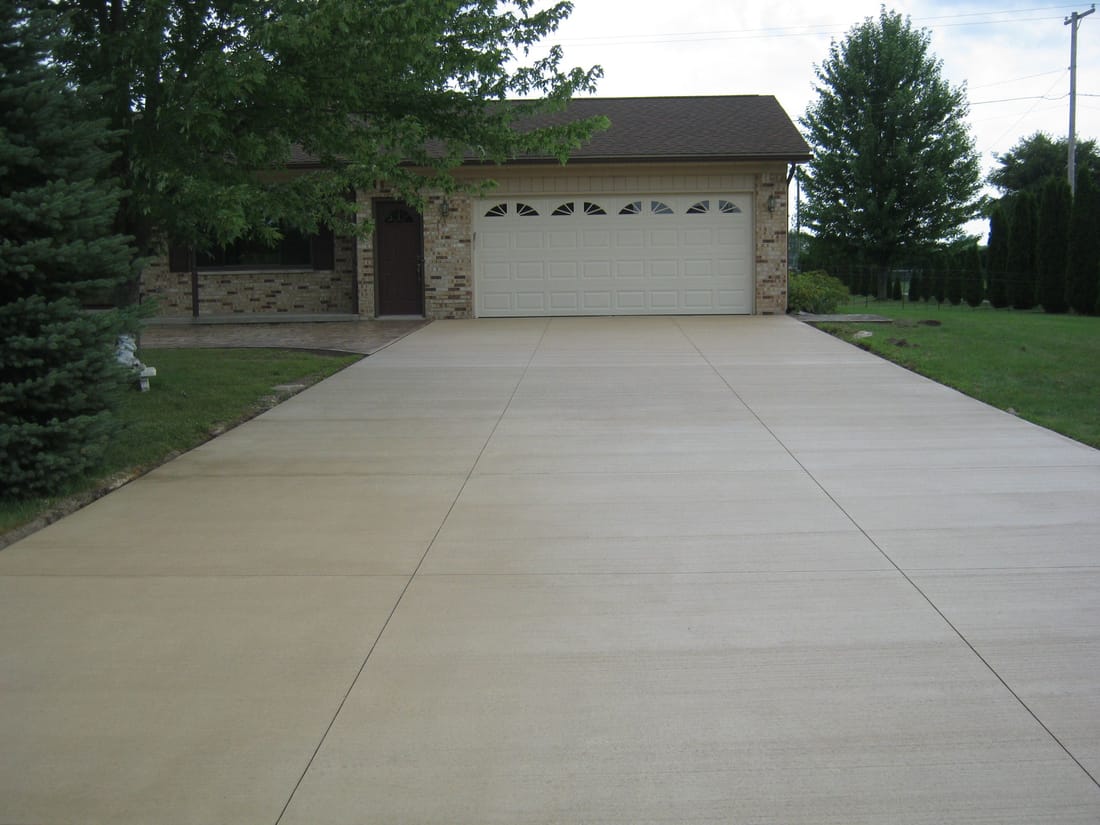
Concrete driveways tailored to Denver homes and weather
A concrete driveway in Denver has to do more than look good. It needs to handle UV exposure at a mile high, daily temperature swings, and winter freeze-thaw cycles. Superior Concrete Denver designs each concrete driveway installation around these local conditions so you get a surface that stays smooth and safe year after year.
We start by looking at your property as it really is, not as a template. Many Denver homes have narrow city lots, older bungalows with short drives, or 1970s and 1980s houses in suburbs like Lakewood and Aurora with wider front setbacks. We measure slopes, check how water currently drains toward or away from your home, and note obstacles like existing walkways, garage thresholds, and alley access. This helps us decide the proper thickness, reinforcement, and drainage layout before any soil is disturbed.
Concrete driveway options include standard gray broom-finished slabs, decorative colored concrete, exposed aggregate, and saw-cut patterns that mimic large stone panels. We can also integrate matching walkways or a widened parking pad beside your garage. Superior Concrete Denver walks you through pros and cons for each choice, such as traction in winter, maintenance levels, and how different finishes hide tire marks or de-icer residue.
Our goal is to replace mystery with clarity. Before you sign anything, we review a simple plan that shows driveway size, slab thickness, control joint layout, and drainage direction, along with a line-item estimate so you understand exactly what your investment covers.
Our concrete driveway installation process, step by step
A long-lasting driveway starts with what you cannot see. Superior Concrete Denver follows a sequence designed specifically for Front Range soils and weather, rather than a generic national approach.
1. Site evaluation and utility checks. We confirm property lines where needed, locate underground utilities, and identify any problem areas like soft spots, tree roots, or existing frost heave. Older Denver neighborhoods often have mixed fill and clay pockets, so this step is critical.
2. Demolition and haul-off. For replacements, we break out your old asphalt or concrete using compact equipment that fits typical Denver driveways without tearing up your yard. All debris is hauled to proper recycling or disposal facilities, not left in your alley.
3. Subgrade preparation. We remove unsuitable soil, then install and compact a road base layer (often 4 to 6 inches of Class 5 or similar aggregate). Proper compaction with a plate tamper or roller minimizes future settling, especially in areas with backfilled utility trenches.
4. Forms and layout. We set wood or steel forms to create the exact shape and slope your driveway needs, aiming for at least 1 to 2 percent pitch away from your house and toward the street gutter or a planned drain. This grading is essential in Denver where spring melt can overwhelm flat driveways.
5. Reinforcement and joints. Depending on load requirements and soil conditions, we install rebar grid or welded wire mesh and often add fiber reinforcement in the mix. Control joints are laid out at proper spacing to manage natural cracking, usually every 8 to 12 feet, and at reentrant corners near garage doors or steps.
6. Concrete placement and finishing. We typically pour a 4 to 5 inch slab for passenger vehicles, thicker if you regularly park RVs or work trucks. The crew spreads, screeds, and floats the mix to create a level surface, then applies a broom finish for traction. If you choose decorative options, this is when color, stamps, or exposed aggregate techniques are applied.
7. Curing and sealing. Proper curing in Colorado’s dry air is crucial. We use curing compounds or wet covering methods to slow moisture loss and reduce the risk of early cracking and surface dusting. After initial curing, we can apply a high quality sealer to protect against moisture, de-icing chemicals, and oil stains.
Concrete options, thickness, and finishes that work in Denver
Not every concrete mix is equal, especially at altitude. Superior Concrete Denver works with local batch plants to specify mixes that hold up in our climate. Most residential driveways use a 4,000 psi or higher concrete with air entrainment to resist freeze-thaw damage. For heavier use or steeper slopes, we may recommend higher strength mixes or different aggregate gradations for better traction and durability.
Thickness matters as much as strength. For most Denver homeowners with typical two car garages, a 4 inch driveway slab is the minimum. We often suggest thickened edges or 5 inch sections near the street if you expect delivery trucks or trailers. If you own a camper, boat, or work vehicle, we will talk through axle loads and turning areas so the pavement is reinforced where it will see the most stress.
Finish choices affect both appearance and safety. A light to medium broom finish is the most common because it provides year-round traction when snow and ice are present. For a more decorative look, you can choose:
• Colored concrete, either integrally colored in the mix or with surface hardeners.
• Exposed aggregate, where the top layer of paste is washed away to reveal decorative stone that offers excellent skid resistance.
• Saw-cut patterns, which create clean geometric lines that complement modern Denver builds without adding maintenance.
We also consider sunlight and shade patterns. On south facing drives that receive strong sun, we avoid very dark colors that may show salt streaks and heat up snowmelt too quickly, which can refreeze at night. In shaded areas under mature maples or elms common in established neighborhoods, we may adjust the texture slightly for extra grip and recommend a different sealer schedule.
What affects the cost of a concrete driveway in Denver
Homeowners often ask why driveway quotes vary so much. Superior Concrete Denver explains the cost factors up front so you can compare bids on equal terms instead of just picking the lowest number.
Key drivers of cost include:
• Size and shape. A straight, single car driveway to a detached garage off an alley will cost less than a wide, curved drive with an extra parking pad. Complex shapes add formwork time and cutting details.
• Site access. Tight side yards, steep slopes, or difficult truck access in some Denver hillside neighborhoods can increase labor. In older areas with narrow streets or limited parking, staging concrete trucks may require more coordination.
• Demolition and haul-off. Removing thick, reinforced concrete or multiple layers of old asphalt takes more time and disposal volume than breaking up a thin, cracked slab.
• Subgrade issues. If we uncover soft or saturated soils, we may need additional excavation, base material, or geotextile fabric to stabilize the driveway area. This is common in zones where downspouts have discharged near the drive for years.
• Reinforcement and thickness. Upgrading from basic mesh to rebar, adding thickened edges, or increasing slab thickness for heavy loads all add concrete and steel but significantly improve lifespan.
• Decorative finishes and extras. Stamping, color, exposed aggregate, integrated walkways, or inlaid borders increase material and labor costs but may still be more economical than separate hardscape projects later.
We provide clear, written estimates that break these factors out. That way, if you need to prioritize, we can help you decide where upgrades truly add long term value, such as better base and reinforcement, and where you can save without compromising performance.
Preventing common concrete driveway problems in Colorado
Concrete naturally shrinks and expands, especially in a climate that cycles from freezing nights to sunny afternoons. The goal is not to eliminate cracking entirely, but to control where and how it occurs. Superior Concrete Denver uses several techniques to keep your driveway functional and attractive for the long term.
Controlled cracking. By placing control joints at the right spacing and in the right locations, we guide shrinkage cracks into those joints so they are straight and less noticeable. Around garage openings and steps, we add extra joints or reinforcement to address stress concentration points.
Freeze-thaw resistance. Air entrained concrete helps withstand freezing moisture, but drainage is equally important. We design slopes to keep water from pooling, which is a common cause of surface scaling and spalling in Denver winters. If necessary, we suggest trench drains or channel drains to move meltwater safely.
De-icer awareness. Many off-the-shelf ice melt products can be harsh on concrete, especially in the first winter after placement. We provide guidance on which products to avoid, how to use sand for traction, and why you should not shovel down to bare concrete with metal blades that can gouge fresh surfaces.
Tree and root planning. In neighborhoods with older trees, roots can lift concrete over time. We look at existing tree locations and species, then recommend layout adjustments, root barriers, or alternative materials at critical spots. This planning helps reduce the chance of buckling or uneven panels.
Maintenance practices. We explain a simple maintenance routine that fits Denver conditions: periodic sweeping, gentle power washing, and resealing every few years depending on sun exposure and use. Catching small issues like early joint widening or minor settlement allows for inexpensive repairs instead of full replacements.
What to expect when you hire Superior Concrete Denver
From the first visit to final cleanup, Superior Concrete Denver focuses on minimizing disruption while delivering a driveway you can rely on.
Consultation and proposal. We meet on site, listen to how you use your driveway, and take detailed measurements and grades. Within a short time, you receive a written proposal with scope, materials, and an estimated schedule tied to Denver’s weather patterns so you know when work is likely to occur.
Scheduling and preparation. Once you approve the plan, we schedule your project and discuss access needs, parking alternatives during construction, and any HOA or city permitting requirements. If permits are needed for curb cuts or changes near the sidewalk, we can assist with that process.
Construction timeline. Most standard concrete driveway installations take 2 to 4 working days from demolition to final pour, depending on size and complexity, followed by a curing period when you will keep vehicles off the new surface. We provide clear guidance on foot traffic (usually after 24 hours) and vehicle traffic (often 5 to 7 days, weather dependent).
Communication. You will know who your on-site contact is and how to reach them throughout the project. If weather forces a schedule change, we let you know as early as possible and explain the reasoning so your driveway is not poured under poor conditions.
Post-installation support. After completion, we walk the driveway with you, point out joint locations, drainage paths, and any care instructions specific to your chosen finish. If questions come up during the first winter or you notice anything that concerns you, you can reach back out and talk to a team that already understands your property.
When you are ready to plan a concrete driveway that fits both your home and Denver’s climate, Superior Concrete Denver is prepared to help you design and build it with care and attention to detail.