Home › Concrete Parking Lots and Heavy-Duty Pavement
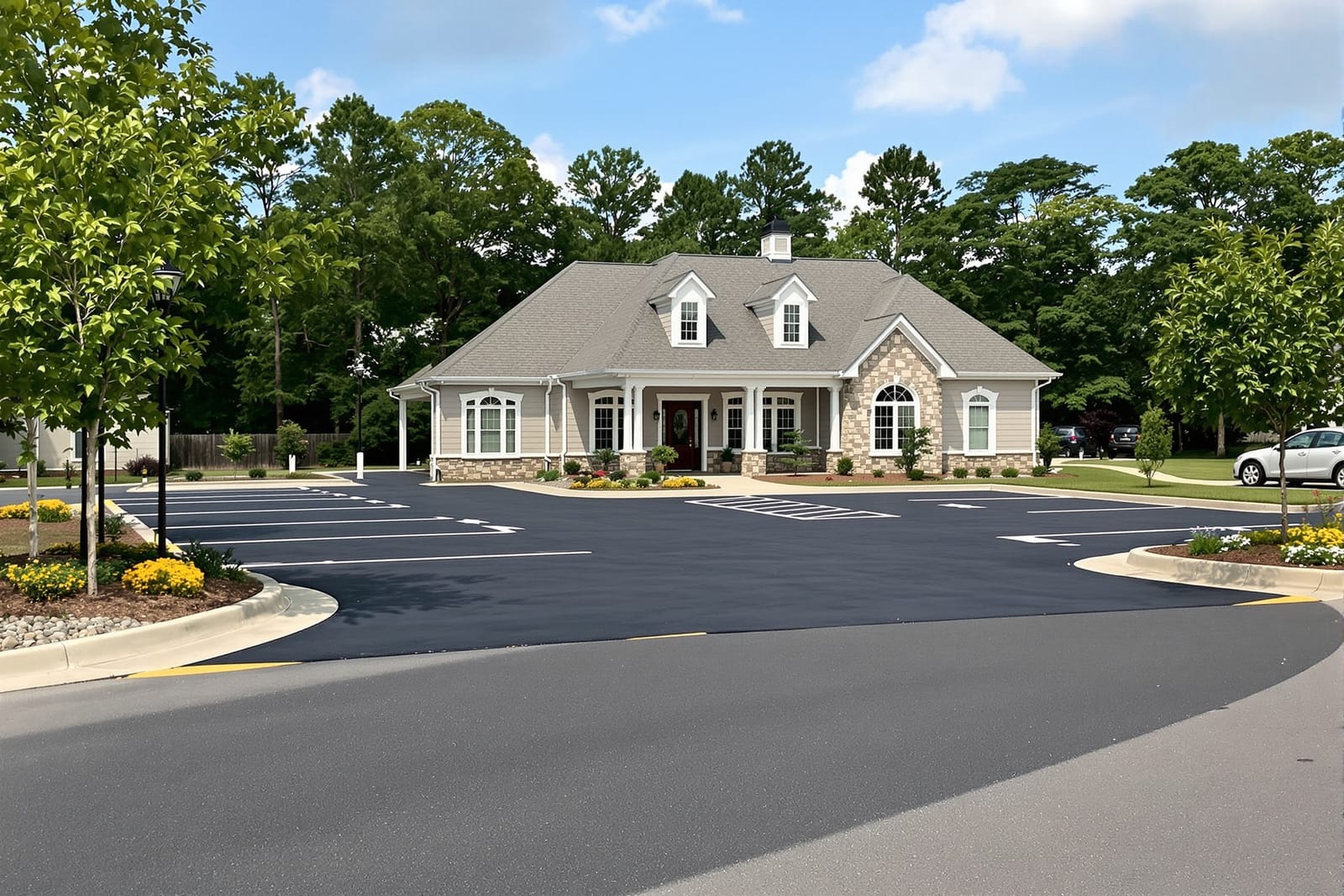
We construct concrete parking lots and heavy duty pavement in Denver, CO for commercial and industrial sites. From layout and subgrade prep to joint planning and striping, we deliver concrete parking areas that handle traffic, weather, and heavy loads with minimal maintenance.
Superior Concrete Denver provides professional concrete parking lot throughout Denver, CO, Colorado and the surrounding area. Our licensed, insured crew delivers safe, clean, on-time work with a free estimate before anything begins. Call (970) 648-8412 or request your free quote.
Concrete Parking Lots Built for Denver Conditions
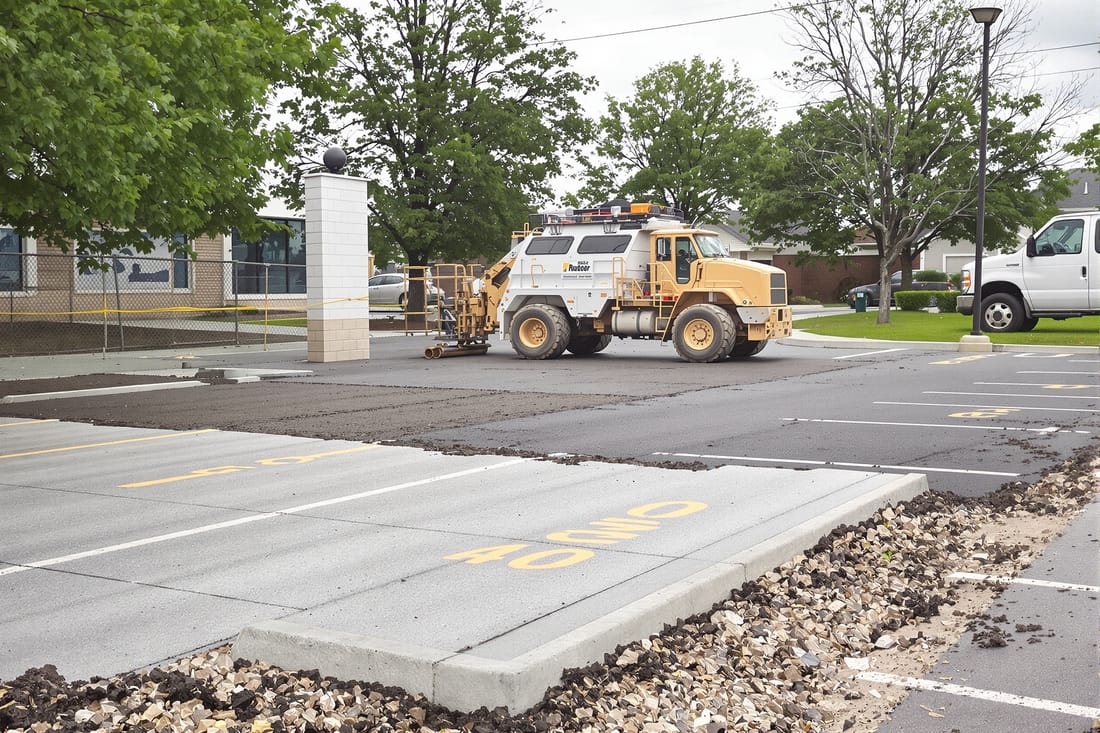
If you run a business in Denver, your concrete parking lot takes more abuse than most people realize. Freeze-thaw cycles, deicing salts, snow plows, delivery trucks, and intense sun all go to work on that pavement every day. At Superior Concrete Denver, we design and build concrete parking lots and heavy-duty pavement specifically for Front Range conditions, not a generic national standard.
Most older asphalt lots in Denver strip malls and light industrial areas near I-25 and I-70 fail early because they were never built for current traffic loads. Cracking, rutting, and constant patching become a regular expense. A properly designed concrete parking lot costs more up front, but typically lasts two to three times longer with far less maintenance. That matters if you own a multi-tenant building in places like Aurora, Lakewood, or the outskirts of downtown, where shutting down parking means unhappy tenants and lost revenue.
When we look at a property, we do not just quote square footage. We ask what type of vehicles use the lot, how often snow plows scrape it, where water tends to collect after a storm, and what your future plans are. A daycare in Stapleton needs a different pavement strategy than a warehouse in Commerce City. That practical planning up front is what keeps concrete performing through Denver winters instead of scaling, spalling, and crumbling in a few years.
How We Build Heavy-Duty Concrete Parking Lots
Superior Concrete Denver follows a step-by-step process that is focused on long-term performance, not just pouring and leaving.
1. Site evaluation and layout
We start by walking the property, checking drainage patterns, soil conditions, and existing utilities. In older Denver neighborhoods and industrial corridors, water often runs toward the building instead of toward the street. We correct that in the layout so the finished concrete parking lot sheds water away from structures and does not create ice sheets at entrances.
2. Excavation and base preparation
For most commercial parking lots we excavate 8 to 18 inches, depending on traffic loads and soil conditions. We then install and compact a structural base, usually 4 to 8 inches of class 6 road base, in thin lifts with plate compactors and rollers. In areas with expansive clay soils, which are common in many parts of the metro, we may over-excavate and add geofabric or soil stabilization to prevent heaving.
3. Thickness, reinforcement, and mix design
Light-duty parking areas for cars usually get 5 to 6 inches of concrete. Drive lanes, dumpster pads, and areas for box trucks or semis often need 7 to 8 inches or more. We can use rebar, welded wire mesh, or fiber reinforcement, or a combination, depending on the loads. We specify air-entrained, low water-cement ratio mixes designed for freeze-thaw durability and deicing chemicals, something that is not optional in Denver. Where budgets allow, we often recommend a slightly higher strength mix to resist snow plow abrasion and point loads from parked trailers.
4. Forming, placing, and finishing
We use forms to set exact elevations and slopes for drainage, usually 1 to 2 percent so water moves off the surface but does not cause cars to roll. Concrete is placed using chute, pump, or buggy depending on access. Our crews consolidate and screed the slab, then finish the surface with a broom texture that provides traction in wet or icy conditions. Power trowel slick finishes are avoided in exterior parking applications because they become slippery and more prone to scaling.
5. Joints, curing, and sealing
We cut or tool joints at calculated spacing to control where the concrete cracks, usually in panels roughly 10 to 15 feet on center depending on thickness and layout. Proper curing is critical in Denver’s dry climate. We apply curing compound or use wet curing methods so the slab reaches full strength and resists surface dusting. On many projects we apply a penetrating sealer after cure to help protect against salts and moisture.
Local Challenges: Freeze-Thaw, Salts, and Heavy Traffic
Parking lots in Denver fail for predictable reasons, and we design to avoid each of them.
Freeze-thaw cycles
Denver can swing from sunny and warm to freezing overnight. Water that soaks into low-quality concrete then freezes and expands, which causes surface scaling and pop-outs. We specify air-entrained concrete, tight finishing practices, and proper curing to minimize permeability. We also pay attention to slopes, so water does not stand on the surface or at loading docks.
Deicing salts and snow plows
Most commercial properties use magnesium chloride or rock salt and rely on plows all winter. Both are hard on concrete if it is not designed for it. We use mixes tested for resistance to deicers and recommend a schedule for sealing high-traffic lanes and entrances. At drive entries and around dumpster pads, we may thicken the slab or add additional reinforcement to handle snow plow blades and repeated scraping.
Heavy and repetitive loads
Grocery stores along Colfax, warehouses near the rail lines, and distribution centers around DIA all see repeated axle loads from trucks, trailers, and forklifts. Asphalt in these conditions tends to rut and shove. We design concrete panel sizes, thicknesses, and joint layouts specifically for those wheel paths so the pavement carries loads through its depth, not just at the surface.
Remodels and tie-ins to existing pavement
A lot of Denver properties have a patchwork of old asphalt and concrete. When we replace only part of a lot, we pay close attention to sawcut lines, doweling between new and old concrete, and feathering grades so you do not end up with trip edges or puddles at transitions. We often convert drive lanes and dumpster areas to concrete while leaving lightly used asphalt stalls, which can be an effective phased upgrade for budget-conscious owners.
Cost Drivers and Design Options for Your Concrete Parking Lot
No two lots price out the same, even if the square footage is similar. Here is what really drives cost for a concrete parking lot in Denver:
Subgrade and base work
If your site already has a stable, well-drained base, we can often use or improve it. Many older lots around Denver were built on thin or poorly compacted base material. Fixing that means more excavation, more base, and more compaction, but skipping that step is why some lots fail in 5 years instead of 25.
Thickness and reinforcement
A light-duty 5 inch slab with fiber reinforcement costs less than an 8 inch slab with full rebar mats. If your property only ever sees passenger vehicles, we will not oversell you. If you have frequent truck deliveries or want to future-proof the site, we show you exactly what the added thickness and steel will cost and why it matters.
Drainage and layout complexity
Simple rectangles cost less than lots with islands, tight access, and multiple elevations. In hilly parts of the metro, we sometimes need retaining, stepped slabs, or additional storm inlets to get drainage right. Line striping, accessible stalls, and curb ramps must meet ADA and City of Denver requirements, and we can coordinate that layout with your architect or provide practical suggestions if you do not have one.
Finishes and upgrades
Most businesses choose a standard broom finish with basic striping. Upgrades include integral color for specific areas (for example, fire lanes or pedestrian paths), decorative borders at storefront entries, or thicker approaches at loading docks. While you usually do not need decorative concrete for a general parking lot, small design choices can improve wayfinding and safety without a big cost increase.
Maintenance expectations
Part of cost is long-term. A concrete parking lot with periodic cleaning, joint sealing, and occasional crack repair will outlast asphalt by a wide margin. We give you a realistic maintenance schedule and cost estimate so you can compare total ownership cost, not just the initial bid.
What to Expect When You Work With Superior Concrete Denver
Business owners and property managers in Denver are often worried about downtime when replacing a parking lot. Our planning is geared toward keeping your operations going.
Phasing and access planning
For retail plazas or medical offices, we often split the project into phases so half the lot stays open while we work on the other half. We can schedule disruptive work like sawcutting and concrete pours during off-peak hours or weekends. Clear signage, temporary access routes, and coordination with tenants are all part of the plan, not an afterthought.
Permits, inspections, and compliance
We are familiar with City and County of Denver requirements and neighboring jurisdictions. We coordinate permits, inspections, and any required engineering. Where needed, we work with structural or civil engineers to stamp designs for heavy-duty applications.
Straightforward communication
You get a clear proposal that spells out thicknesses, base depth, reinforcement, joint layout, and curing method, not just a price per square foot. During the job, you will know what is happening each week: demolition, base work, forming, placement, curing, and striping. If we uncover hidden issues, such as soft subgrade or buried debris from previous construction, we show you the problem and the options before moving forward.
If you are considering a new concrete parking lot or converting part of an existing asphalt lot to concrete, Superior Concrete Denver can walk the site with you, discuss options that fit your traffic and budget, and provide a detailed plan so you know exactly what you are getting and how long it should last in real Denver conditions.